

Different strokes
Be aware of the varying risks, types, causes and symptoms of stroke
What is a stroke?
A stroke is a sudden loss of brain function caused by a brain blood vessel blockage (ischemic stroke) or rupture (hemorrhagic stroke). Symptoms can include weakness or loss of sensation, often on one side of the body; confusion or difficulty speaking; vision difficulties; headache; or loss of coordination and balance.
Stroke can happen to anyone, at any age, from infancy to adulthood, although most occur in those older than 60. Yet stroke disproportionally affects women—more die of stroke or have worse outcomes afterward, and more are living with the effects of stroke and facing more challenges as they recover. “We don’t have a great understanding about trends in treatment for women, so it’s a big area of research,” says Lindsay.
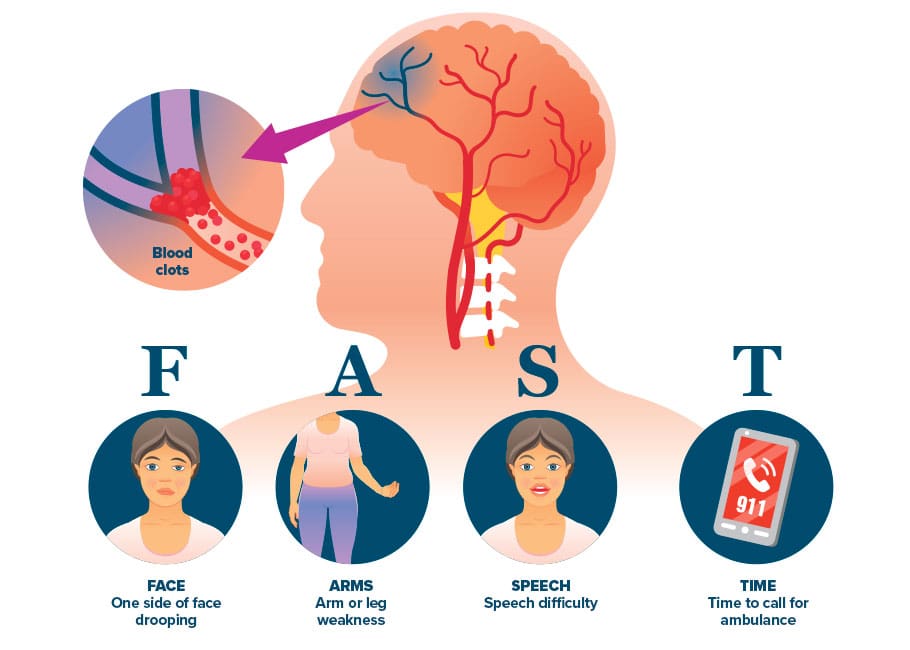
The onset of symptoms is typically sudden. The acronym FAST is used to teach people how to detect symptoms:
- Facial drooping on one side
- Arm or leg weakness
- Speech difficulties
- Time (if you experience the first three, it’s time to call 911)
“The quicker you act by calling 911, the better your outcome will likely be,” says Lindsay. “Don’t drive yourself to the hospital or have someone drive you. A 911 call triggers actions at the hospital, where they’ll be preparing to do the appropriate tests when you arrive.”
Treatment
Treatment may include the removal of a blood clot or clots, then procedures such as angioplasty or stents, or medication such as blood thinners, to prevent further clots from forming. It may take weeks or months of physical and speech therapy to strengthen the affected areas.
Now 66, Frew is able to reflect on his experience—and offer advice. “There was massive depression at first,” he told the Heart and Stroke Foundation of Canada. “Stroke is such an insult to the human condition. You have to allow yourself to be broken and mourn what you have lost, then accept that this is it.”
Although people tell Frew they can’t tell he had a stroke, he says his right hand and arm will never be the same. He’s now vigilant about taking his medication, swims daily, is mindful of what he eats and has cut his sodium intake. “If I can help one person feel less stigmatized, I have done my job,” he says.
Young people and strokes
Over the past 15 years, more Canadians in their late 20s, 30s and 40s have suffered strokes. Why? Because more of them are living with high blood pressure and type 2 diabetes, and when risk factors for stroke show up early, so do the diseases they lead to, say the experts. Studies show that many young people are finding work environments stressful, leaving them with less time to exercise and eat well.
If there’s a family history of strokes, their risk is higher. And if a young woman smokes cigarettes, has classic migraines with aura and is taking oral contraceptives, her risk is much higher.—JD